Diastasis Recti After Pregnancy: What It Is, How to Check It and What to Do Next
By Carla Kay
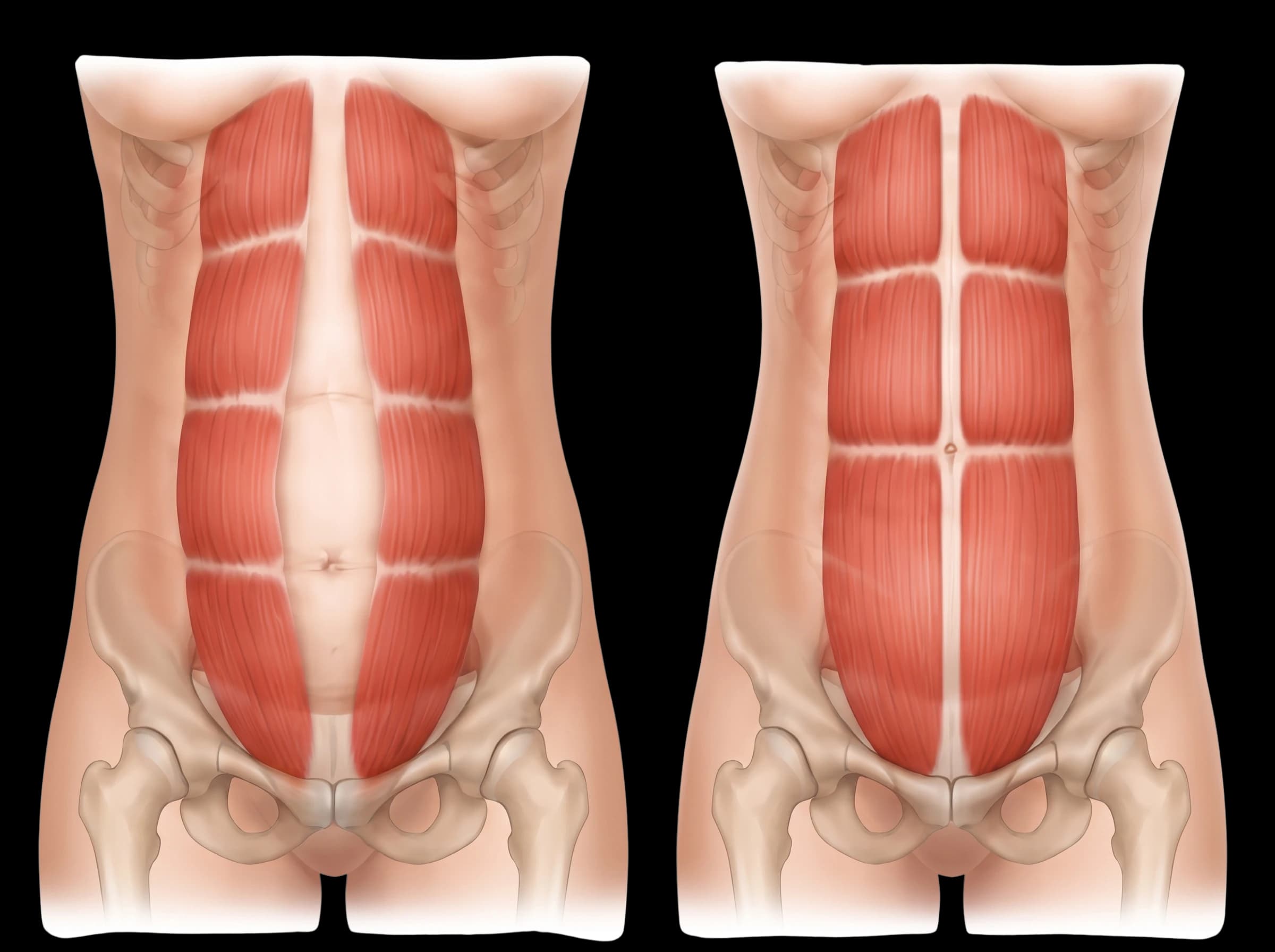
If your belly still hasn't gone back down months after giving birth, no matter how many crunches you do, it's probably not about effort. It's often diastasis recti.
What Is Diastasis Recti?
During pregnancy, the linea alba (the connective tissue that runs down the center of your abdomen) stretches to make room for your growing baby. This causes the two halves of your rectus abdominis muscle to separate. For most women, this is completely normal.
The issue shows up when that gap stays wide after birth and your core doesn't regain its function. The result: a postpartum belly that bulges, a lack of stability through the trunk, and sometimes lower back pain.
How to Check for Diastasis Recti at Home
Here's a simple self-check you can do at home:
- Lie on your back, knees bent, feet flat on the floor
- Place two or three fingers just above your belly button
- Lift your head and shoulders slightly, like a mini crunch
- Feel for a gap between the two muscle bands, and note how wide and how deep it is
Repeat the test at your belly button, then just above and just below it. A gap of about 1 to 1.5 fingers is generally considered normal and doesn't necessarily point to diastasis. Diastasis recti is generally considered to start around a 2-finger gap. For a more precise evaluation, you can consult a doctor or a qualified health professional.
Why Crunches Usually Make It Worse
The instinct to "do more ab work" to shrink the belly is exactly what tends to backfire during recovery. Crunches and similar moves increase intra-abdominal pressure, which can widen the gap instead of closing it.
What your core actually needs is deep, foundational work: relearning how to breathe properly, reactivating the transverse abdominis, and restoring good postural alignment. It's less flashy than a set of crunches, but it's what actually works.
Is Surgery the Only Option?
For most women, a well-structured non-surgical approach leads to real improvement: the gap narrows, the connective tissue regains tension, and the core gets its supportive function back.
The key is progression. You don't reactivate a postpartum core in a week, you rebuild it step by step, in the right order.
What to Do Next
This is exactly what Bye-Bye Mommy Pouch was built for: four progressive steps to reactivate your core from the inside out, no crunches, no risky movements, at a pace that respects where your body actually is.